How to Spot Roof Damage After a Storm: Homeowner’s Checklist
When the wind howls and the rain pounds, it’s hard not to worry about what’s happening over your head. After the skies clear, you might be left with more than just puddles—your roof could be hiding damage that leads to leaks, mold, or even structural issues.
At STL Roofing, we know storms don’t wait for business hours. Here’s a step-by-step checklist to help homeowners and property managers spot roof damage early, stay safe, and know exactly when to call for emergency roofing help.
Why Inspect After Storms? 🌪️
You wouldn’t drive a car after a fender-bender without checking for hidden problems. Your roof is the same—what you can’t see can hurt you, your family, or your business.
Storms bring wind, hail, and flying debris that can loosen, crack, or even rip away parts of your roof. Even if nothing looks wrong at first, water can creep in, slowly turning small problems into costly headaches.
Quick fact: According to the International Association of Certified Home Inspectors (InterNACHI), unaddressed storm damage is one of the leading causes of premature roof failure.
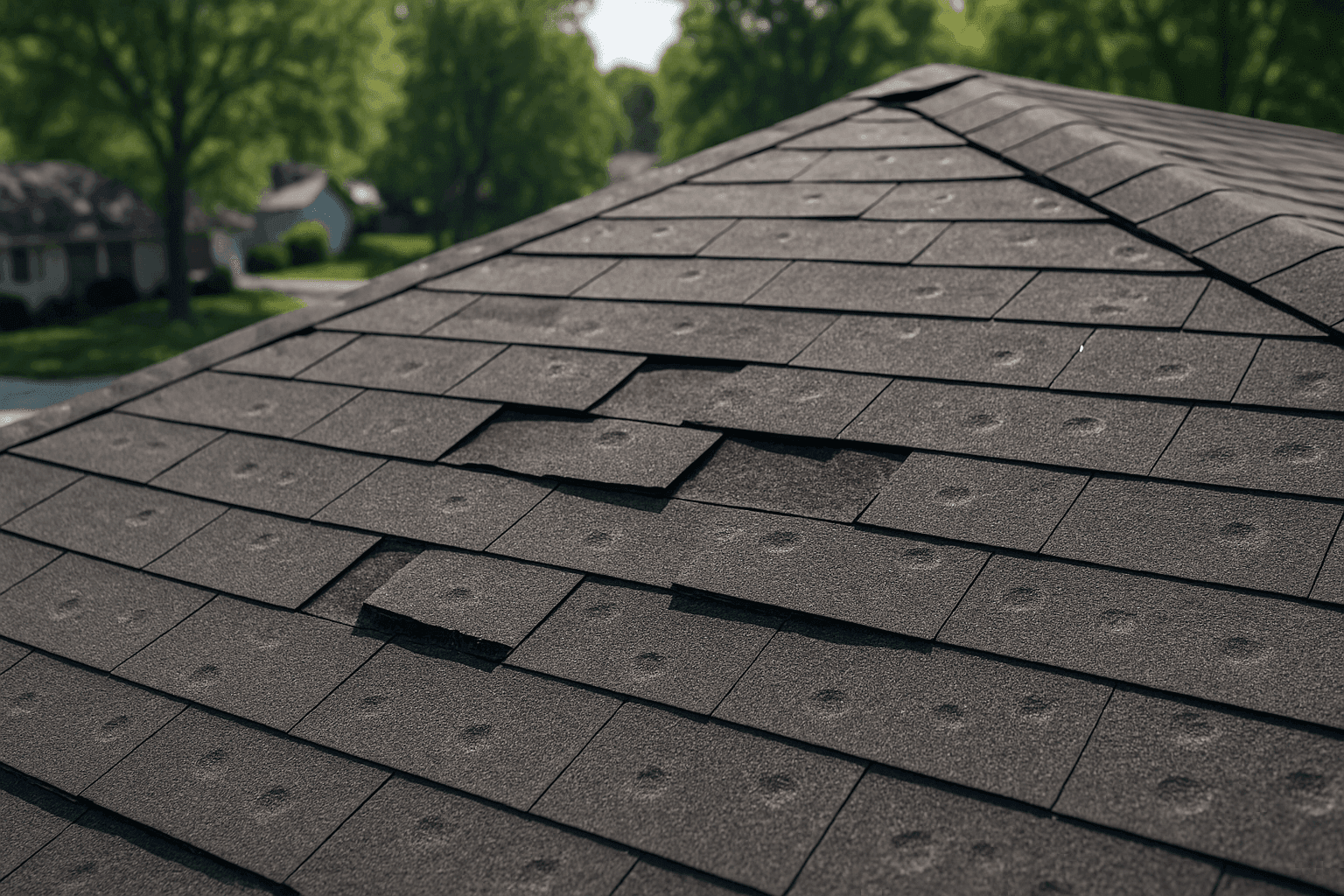
Common Signs of Damage (Missing Shingles, Dents, Leaks)
Walk around your home or building—binoculars help!—and look for these signs:
- Missing or shifted shingles: Like missing puzzle pieces, these are easy to spot from the ground.
- Curled, cracked, or bruised shingles: Hail leaves behind dents; wind can make shingles stand up or crack.
- Granules in gutters: Asphalt shingles shed granules when damaged—check your downspouts and gutter bottoms.
- Dented metal roofing or flashing: Hail and debris leave visible marks.
- Loose flashing around chimneys, vents, or skylights: Water sneaks in through these weak spots.
- Leaks or water stains inside: Check ceilings and attics for fresh spots, drips, or musty smells.
- Sagging roof lines or decking: A wavy or uneven surface can signal hidden structural damage.
Do: Take photos of every issue you spot; these are gold for insurance claims. Don’t: Climb onto a steep or wet roof—leave that to the pros.
Safe Inspection Practices
Safety is your first priority. Roofs are slippery after rain, and hidden damage can make them unstable.
- Inspect from the ground. Use binoculars for a closer look.
- Wear sturdy shoes and gloves if you must handle debris.
- Avoid ladders in high winds or if you feel unsteady.
- Watch for downed power lines or loose gutters—these are hazards.
- Never go on the roof alone. If you must, have someone spot you.
The Occupational Safety and Health Administration (OSHA) recommends using fall protection for any roof work above six feet. For most homeowners, that means: stay off and call a professional.
When to Call a Professional
Sometimes, damage hides in plain sight. Small punctures, loose flashing, or cracked seals can let water in for weeks before you notice.
Call STL Roofing for emergency roofing help if you spot:
- Water dripping inside after a storm
- Large sections of missing shingles or roofing tiles
- Exposed wood or underlayment
- Bent or detached gutters and downspouts
- Chimney flashing that looks out of place
- Skylights with broken seals or condensation inside
Pro tip: Insurance companies often require an inspection by a licensed contractor to approve storm claims. A professional eye spots what others miss.
Documenting Damage for Claims 📸
Filing a claim? Good documentation is your best friend.
- Take clear, well-lit photos of every damaged area, inside and out.
- Photograph your gutters, downspouts, and any pooling water near your foundation.
- Keep all receipts for emergency repairs or supplies.
- Write down the date, time, and description of the storm (hail size, wind speed, etc).
These steps help your insurance adjuster understand the scope—and speed up your claim.
Quick Safety Checklist
- Walk the property perimeter—look up, not just ahead.
- Use binoculars for distant or high spots.
- Check inside: attic, ceiling, and around skylights.
- Inspect gutters, downspouts, and ground for debris.
- Photograph and list every issue; don’t rely on memory.
- If in doubt, call STL Roofing for a professional inspection.
DIY vs. Call a Pro
DIY Inspection:
- Works for light debris or obvious shingle loss.
- Good for taking photos and making a damage list.
- Safe for ground-level or single-story homes.
Call a Pro:
- For steep, tall, or slippery roofs.
- If you see structural issues (sagging, exposed wood).
- For hidden leaks or multiple problem spots.
- When you need emergency roofing or Downspout Installation near you.
Don’t risk your safety. Professionals are trained, insured, and can spot hidden issues before they grow.
What Pros Do On Arrival
A professional roofing team will:
- Inspect the whole system: shingles, flashing, gutters, ventilation, and insulation.
- Use moisture meters and infrared cameras to find hidden leaks.
- Assess structural damage to decking and supports.
- Provide a detailed report and photos for your records.
- Recommend immediate repairs to prevent further damage.
At STL Roofing, we’re equipped for both residential and commercial roofs—flat, metal, shingle, tile, and more.
Prevention & Maintenance
Storms aren’t going away—but with regular care, your roof can stand up to the challenge.
- Schedule annual roof inspections, especially before storm season.
- Keep gutters and downspouts clear to prevent water backup.
- Trim overhanging branches to limit debris.
- Ask about sealants and coatings for extra protection.
- Consider preventative maintenance plans for both homes and businesses.
The National Roofing Contractors Association (NRCA) recommends biannual inspections—spring and fall—for best results.
Costs & Time Factors
How long does storm damage repair take?
- Minor repairs may be done in a day or two.
- Larger jobs (like full roof replacement) can take a week or more, depending on weather and material availability.
Cost factors include:
- Roof size and type (metal, shingle, tile, flat)
- Extent of damage
- Emergency service fees (especially after widespread storms)
- Insurance coverage
Tip: Quick reporting and professional documentation can help you avoid delays and extra expenses.
When It’s an Emergency
Call for emergency roofing if:
- Water is entering your home or business right now
- Part of the roof has collapsed or is sagging dangerously
- Electrical systems are exposed to the elements
- You can see daylight through your roof or ceiling
Don’t wait. Fast action can mean the difference between a simple fix and a major rebuild.
FAQ
How soon should I check my roof after a storm?
- As soon as it’s safe. Early inspection prevents small problems from growing.
Can I repair minor storm damage myself?
- Small fixes like clearing debris might be possible, but most repairs—especially anything involving shingles, flashing, or leaks—should be left to professionals.
Will insurance cover storm damage?
- Most policies cover “sudden and accidental” damage, but check your policy and report issues promptly.
Do I need to replace my whole roof?
- Not always. Many issues can be repaired, but widespread or structural damage may require replacement.
Local & Seasonal Considerations 🌦️
In areas with heavy rain, hail, or snow, roofs take a beating. STL Roofing has experience with every type of weather—blistering summers, icy winters, and everything in between. We handle both residential and commercial jobs, from Downspout Installation to metal roofing and leak repair.
Stay ahead of the next storm: Download our free Homeowner’s Roof Damage Checklist (PDF) for your fridge or toolbox.
When storms hit, quick action matters. STL Roofing is always ready to help—day or night—with emergency roofing, inspections, and repairs. Don’t wait for leaks to turn into losses.
Call STL Roofing now — or reach us anytime at 888-887-3097 .