Emergency Roofing Guide: Steps to Take Before Help Arrives
When a roof crisis hits, panic is normal. Water dripping from your ceiling. Shingles scattered like leaves after a storm. You’re worried about what’s next. STL Roofing gets these calls 24/7—often from homeowners and business managers who never expected to need emergency roofing.
In these moments, you need clear steps. Fast action. And a team you can trust to handle everything from leak repair to downspout installation, no matter where you are. With years of experience, proper licensing, and reviews from customers nationwide, STL Roofing is here to guide you through the storm, starting now.
Recognizing Roofing Emergencies 🛑
Some roofing problems can wait. Others can’t. How do you tell the difference?
Think of your roof as your property’s umbrella. When it’s shredded, or water is pouring through, any delay risks expensive repairs—or even structural damage. Here are signs of a true emergency:
- Water actively leaking indoors or pooling on floors
- Large sections of missing shingles or tiles after wind or hail
- Sagging, bowing, or noises from the attic or ceilings
- Damage to roof flashing, especially around chimneys or skylights
- Gutters or downspouts torn away, leaving siding or foundation exposed
- Storm debris puncturing the roof or blocking drainage
If you spot any of these, it’s time to act. But safety comes first.
First Safety Precautions
Before you do anything else, pause. Your safety matters more than drywall or carpets. Roofs after storms can be slick as ice, and ceilings may collapse without warning.
Quick Safety Checklist:
- Stay off the roof—never climb up to inspect damage in bad weather or at night.
- Avoid rooms with ceiling bulges or active drips; water can cause collapse.
- Shut off electricity in affected areas if water is near lights or wires (per National Fire Protection Association guidance).
- Keep children and pets away from the area.
- Wear shoes with good grip if you must walk near leaks.
If you smell gas, hear popping sounds, or see sparks, evacuate and call emergency services.
Temporary Leak Mitigation
Sometimes, a little action buys you a lot of time. But think bucket, not hammer.
Quick tips to slow damage:
- Place buckets, pans, or towels under drips to catch water.
- Use plastic sheeting or tarps to cover valuables or electronics.
- If safe, close attic vents or windows near the leak to prevent more water in.
- Move furniture and rugs out of harm’s way.
Avoid patching with nails, screws, or heavy objects. You might make things worse.
Protecting Interiors
Water is sneaky. It seeps behind walls, under floors, into insulation. Once it’s there, mold and rot can follow—fast.
- Blot up standing water with towels or a wet vac.
- Open windows, if weather allows, to help air things out.
- Run fans or a dehumidifier in the room, but keep cords away from wet spots.
- Pull curtains, art, or electronics away from damp walls.
If the ceiling starts to sag or blister, don’t poke it. That surprise waterfall could be dangerous.
When to Call a Roofer
Some repairs just aren’t safe or smart to DIY. STL Roofing’s 24/7 emergency line is here for a reason.
Call for emergency roofing if:
- The leak is large, spreading, or near electrical panels
- Shingles, tiles, or metal panels are missing from a major section
- You see daylight through your roof, or can feel air drafts
- Storm debris is stuck on or penetrating the roof
- Gutters or downspouts are dangling or detached
Tell us what you see, hear, and smell—details help us send the right team with the right gear, whether it’s for flat roofs, tile roofing, or a quick downspout repair.
Documenting Damage for Insurance 📸
Insurance companies want proof. The more you provide, the smoother your claim.
- Take clear, well-lit photos of all damage (inside and out).
- Snap wide shots and close-ups of leaks, missing shingles, or broken gutters.
- Note the date, time, and weather conditions.
- Save receipts for any quick materials (like tarps or buckets).
Keep copies of all communication with your insurer. The National Roofing Contractors Association recommends documenting everything before making even minor repairs.
Emergency Action Checklist
- [ ] Stay safe—never climb on a damaged roof
- [ ] Move valuables and pets away from wet areas
- [ ] Catch water with buckets or towels
- [ ] Cover electronics and furniture with plastic sheeting
- [ ] Shut off electricity in affected rooms if needed
- [ ] Call STL Roofing’s emergency line
- [ ] Take photos of all damage for insurance
- [ ] Save receipts for temporary supplies
Tape this to your fridge or keep it in your phone for storm season.
DIY vs. Call a Pro
It’s tempting to try a quick fix. But ask yourself: will this keep my family or business safe? Or just make things worse?
DIY:
- Placing buckets or towels
- Moving belongings
- Covering items with plastic
- Documenting damage
Call the pros for:
- Roof climbs, patching, or tarping
- Downspout installation and repair
- Skylight and flashing work
- Structural repairs and storm restoration
Roofers use specialized fall protection (see OSHA fall safety guidelines). Leave the heights to us.
What Pros Do On Arrival
When STL Roofing’s team arrives, we move quickly but carefully. Here’s what you can expect:
- Safety assessment of the area and structure
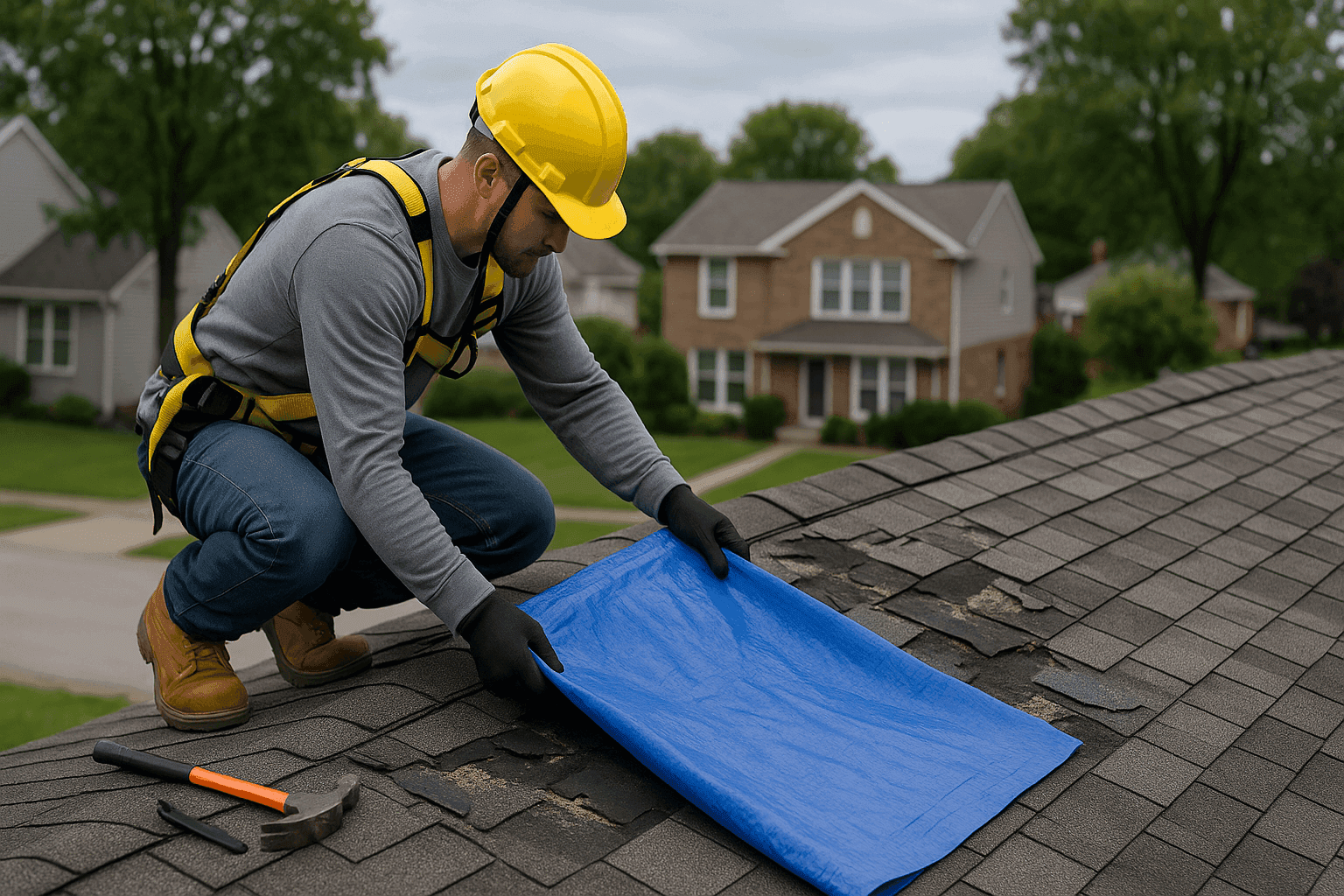
- Emergency tarp or sealant application to limit further water entry
- Inspection of gutters, downspouts, and flashing for hidden problems
- Photo documentation for your records and insurance
- Temporary repairs until full restoration can begin
Our crews are trained for residential and commercial roofs—flat, shingle, metal, or tile. We bring the equipment and experience to stabilize the situation on the first visit.
Prevention & Maintenance
Most emergencies happen when roofs are neglected. A little care goes a long way.
- Schedule annual inspections—catch leaks, loose flashing, or clogged gutters early.
- Clean gutters and downspouts each season to prevent overflow.
- Trim trees and branches away from the roof.
- Ask about eco-friendly options and modern sealants for storm resistance.
- Consider regular preventative maintenance for both homes and businesses.
The Insurance Institute for Business & Home Safety recommends annual checkups, especially before major weather seasons.
Costs & Time Factors
Emergency roofing isn’t one-size-fits-all. Prices and timelines depend on:
- Roof size, pitch, and material (metal, tile, shingle, flat)
- Extent of damage—minor leak vs. structural collapse
- Time of day or night (after-hours calls cost more)
- Weather conditions during response
- Need for specialty services (chimney flashing, skylight repair, decking, etc.)
Expect temporary repairs to be faster and less costly than full replacements. STL Roofing provides clear estimates before permanent work begins.
When It’s an Emergency
Not every drip is a disaster. Here’s when you should treat it as urgent:
- Water is entering electrical panels or appliances
- Multiple leaks or widespread ceiling sagging
- Damage after hurricanes, tornadoes, or hail
- Structural beams or decking exposed
- Downspouts or gutters missing, causing basement flooding
If in doubt, call. Fast action can save you thousands and prevent insurance headaches later.
FAQ
How soon should I call after spotting a leak?
Immediately. The longer water sits, the more it damages insulation, wiring, and drywall.
Is it safe to tarp my own roof?
No. Climbing a damaged or wet roof is risky. Professionals use harnesses and gear you won’t have at home.
Will emergency roofing affect my insurance?
Prompt mitigation (like calling STL Roofing right away) often helps your claim. Document everything.
What if I have commercial property?
We handle both commercial and residential emergencies, including flat roofs, metal, and specialty installations.
Local and Seasonal Considerations 🌦️
In storm-prone regions, emergencies spike during spring and fall. Hail, high winds, and heavy rains wreak havoc on roofs, gutters, and downspouts. Winter brings ice dams and snow loads—especially tough on flat roofs and older structures.
- Schedule inspections before severe weather seasons
- Clear gutters and downspouts before storms
- Ask about ventilation and insulation upgrades to prevent ice and moisture issues
No matter your climate, STL Roofing crews are ready—day or night, coast to coast.
When a roofing emergency strikes, don’t wait. Every minute matters for your safety, your property, and your insurance claim. Let STL Roofing handle the heights, hazards, and headaches—so you can focus on what matters most.
Call STL Roofing now — or reach us anytime at 888-887-3097 .