Skylight Installation & Repair: Brighten Your Home Safely
You wake up to the gentle glow of sunlight, streaming across your favorite chair. It’s not a dream. It’s the magic of a skylight—when installed safely, it changes how your home feels, looks, and even how you live. But that magic can turn quickly if leaks, cracks, or poor installation let in more than just light.
STL Roofing has seen it all—rushed installs gone wrong, leaks after storms, and homes transformed by the right skylight. If you’re considering skylight installation or worried about a leak, you’re in the right place.
Choosing a Skylight: Let the Light In ☀️
Not all skylights are created equal. The right choice depends on your space, your needs, and—let’s be real—your roof.
Types of Skylights
- Fixed Skylights: These are sealed tight. No breeze, but plenty of light. Perfect for rooms that need a little brightening without ventilation, like hallways or attics.
- Vented Skylights: Like a sunroof for your house. They open for airflow and are ideal in bathrooms, kitchens, or anywhere moisture builds up.
There are also tubular skylights—small, round channels that funnel light into tight spots. Great for closets or tiny bathrooms.
Materials Matter
Skylight frames come in aluminum, wood, or vinyl. Each has pros and cons for insulation, weight, and durability. Glazing options? Most homeowners go for double-paned, low-E glass to balance light and energy savings. The U.S. Department of Energy recommends ENERGY STAR®-rated glazing to keep your heating and cooling bills in check.
Placement
Think of your roof as a canvas. Placement determines how much sun (and heat) you’ll get. South-facing skylights flood your home with light—even in winter. North-facing ones mean a steady, soft glow.
Tip: Avoid placing skylights where tree branches might drop leaves, or where snow piles up and lingers.
Installation Process: What to Expect
Installing a skylight isn’t like changing a lightbulb. It’s surgery for your roof. Here’s how the process unfolds:
Timeline
- Planning & Permitting: 1–2 weeks (required in most municipalities; STL Roofing always checks local building codes).
- Prep & Protection: 1 day to prep your space and protect interiors.
- Installation: Most standard skylights take 1–3 days, weather permitting.
- Inspection & Sealing: Up to 1 day. We check everything twice.
Steps, Start to Finish
- Measure & Mark: Accurate sizing is the difference between a snug fit and a leaky nightmare.
- Cut & Frame: We cut the roof, reinforce the opening, and install headers. This keeps your roof structure strong.
- Install Skylight: Place, level, and secure the skylight using manufacturer specs and local code requirements.
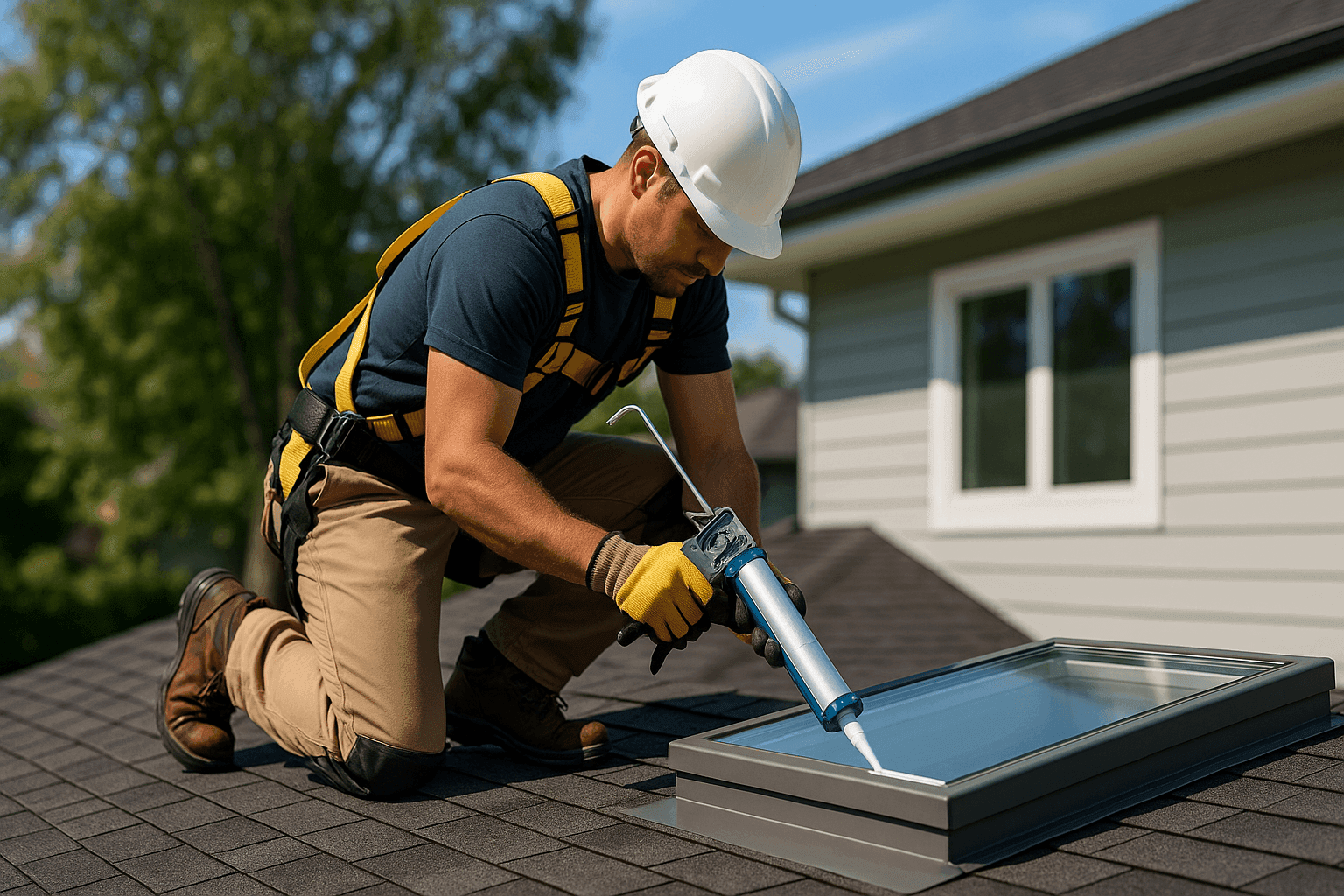
- Flash & Seal: Flashing is the armor against leaks—metal pieces layered with waterproof sealant. STL Roofing uses self-adhesive flashing where possible, following ICC-ES and ASTM standards.
- Interior Finish: Insulate and patch up the ceiling, ensuring a tidy, finished look.
Safety First
We always use harnesses, roof jacks, and follow OSHA fall protection guidelines. Don’t risk it—skylight falls are serious.
Repairing Leaks: Stop Water in Its Tracks 💧
A skylight leak is more than a drip. It’s a warning sign. Water stains, bubbling paint, or musty smells? Don’t wait.
Why Do Skylights Leak?
- Failed flashing (most common)
- Old, cracked sealant
- Damaged glass or acrylic
- Clogged gutters above the skylight
- Poor installation—sometimes shortcuts haunt you later
What Can You Do?
Quick Safety Checklist
- Inspect from inside for visible drips or stains
- Check the roof after rain—look for pooled water
- Isolate the source: is it the skylight or another roof leak?
- Never climb on a wet or icy roof
DIY vs. Call a Pro
- DIY: Caulking tiny cracks? Maybe. Cleaning debris? Sure.
- Pro: Anything that involves removing flashing, glass, or roof shingles. That’s where emergency roofing pros like STL Roofing come in.
What Pros Do on Arrival
- Assess the leak—inside and out.
- Check flashing, sealant, and the skylight frame.
- Replace or reseal as needed, using roofing-grade materials.
- Test with water to ensure it’s fixed.
STL Roofing always documents repairs and follows manufacturer guidelines (see NRCA, International Residential Code for specifics).
Energy Efficiency: Light Without the Heat
A skylight should let in sunshine, not skyrocket your utility bills.
Tips for Efficiency
- Low-E Coatings: These films reflect heat but let in light.
- Double or Triple Paned Glass: Better insulation, less condensation.
- Tinted or Laminated Glass: Cuts UV rays, protects your floors and furniture.
- Proper Flashing & Insulation: Keeps drafts and leaks at bay.
The U.S. Department of Energy recommends sizing skylights to no more than 5% of floor area in rooms with many windows—or 15% in rooms with few.
Ventilated Skylights
Open them for airflow on cool days. Close them tight when it rains. Many models now offer rain sensors.
Costs & Time Factors: What’s the Real Price Tag? 💵
Skylight installation costs can feel like a moving target. Here’s what shapes your budget:
- Type of skylight: Fixed units cost less; vented or custom shapes cost more.
- Size: Bigger is pricier.
- Roof pitch and material: Steeper or harder-to-access roofs take longer.
- Interior finish: Drywall, paint, or trim adds time and cost.
- Emergency service: Fast fixes after storm damage may cost more due to urgency.
Typical timeline: 1–3 days for installation, 2–6 hours for repairs, depending on severity.
Typical cost ranges: From a few hundred dollars for small repairs, up to several thousand for large, custom installations. Always get a clear estimate.
When It’s an Emergency
Sometimes, waiting isn’t an option. Heavy rain, hail, or wind can shatter glass or rip up flashing.
Signs You Need Emergency Roofing
- Water pouring in, not just a drip
- Skylight glass shattered or missing
- Roof structure sagging near the skylight
- After a major storm or falling tree limb
In emergencies, STL Roofing responds fast. We’ll tarp the area if needed and prioritize safety for your home or business.
FAQ: Skylight Edition
How long does a skylight last?
Quality skylights, with proper installation and regular maintenance, often last 20 years or more.
Will a skylight make my room too hot?
Not if it’s installed with the right glazing and shading. Modern skylights are designed to limit heat gain.
Can I clean my skylight myself?
If it’s accessible and you have the right safety gear, yes. Use mild soap and water. Never stand on the glass.
What about warranties?
STL Roofing provides a solid manufacturer-backed warranty on skylight products and our workmanship. Details depend on your model and project scope—just ask for specifics.
Local & Seasonal Considerations 🌦️
Midwest storms, icy winters, and humid summers all stress your skylight—and your roof. STL Roofing uses materials rated for four seasons, and we schedule installations to avoid the wettest weeks when possible.
- Winter installs: We use cold-weather sealants and insulate well to prevent ice dams.
- Storm season: Quick inspections after hail or wind are wise. Many leaks show up weeks after a storm.
Check with your local building department for code requirements—many require permits for new skylight openings.
Brightening your home should be safe and stress-free. Whether it’s a glowing new skylight, fixing a stubborn leak, or emergency roofing after a Midwest storm, STL Roofing is here—day or night.
Call STL Roofing now — or reach us anytime at 888-887-3097 .