Roof Flashing Repair: Prevent Leaks Before They Start
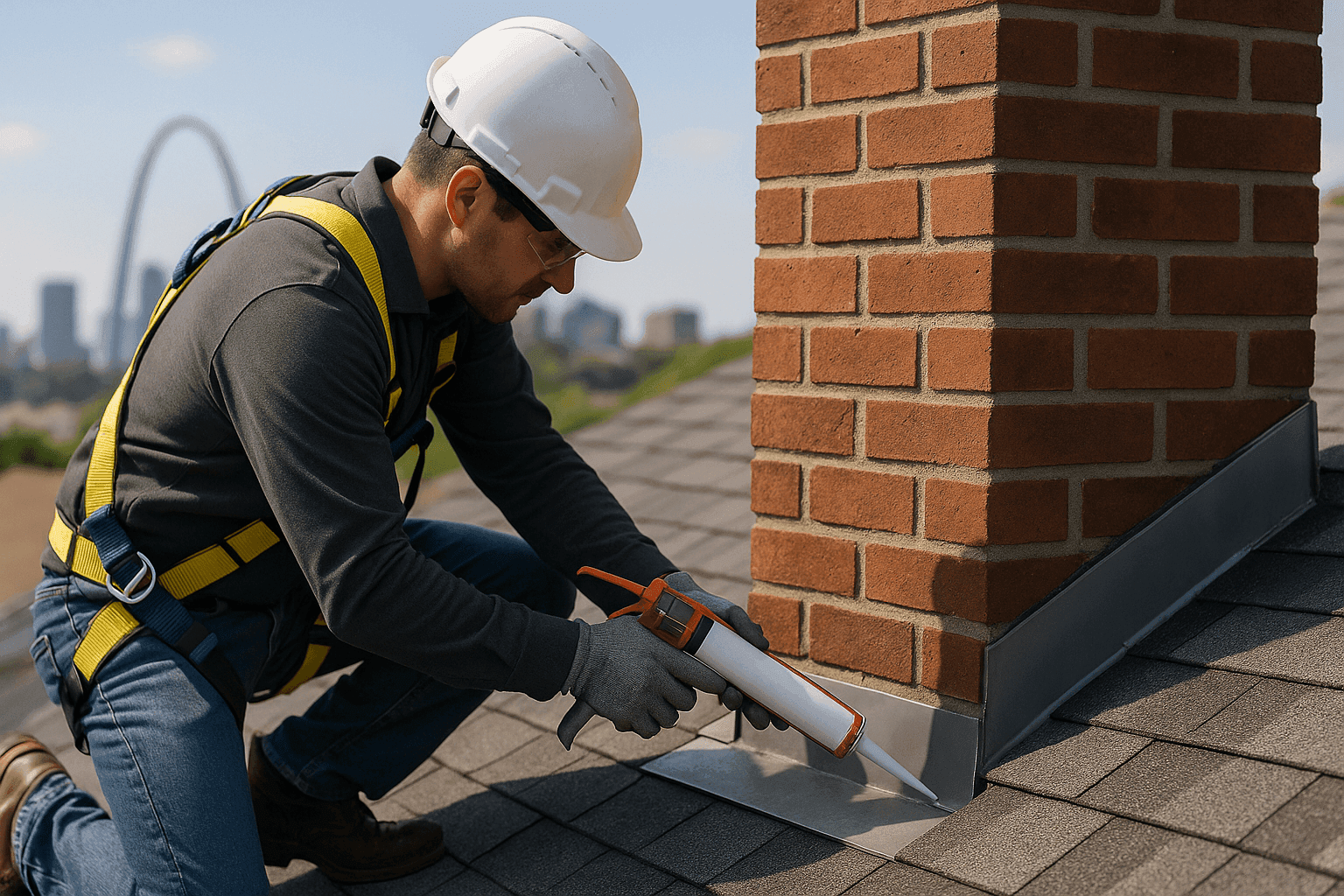
Rain pounds. Wind howls. The water always looks for a way in. You’re sitting inside, comfortable—until a drip starts tapping the floor. It’s a small leak, but it feels like a siren. If you’ve ever had a roof leak, you know how fast a gentle tap can turn into a costly mess.
At STL Roofing, we see this every day. For homes and businesses, leaks sneak in through the smallest weak points. And more often than not? It’s the flashing. That thin metal strip, almost invisible, is the line between dry comfort and wet disaster.
What Is Roof Flashing? 🏠
Think of your roof as a raincoat. Now, imagine the seams—where sleeves meet the body, or zippers meet fabric. Those seams are vulnerable. Flashing is like the extra tape and stitching that keeps those seams watertight.
Roof flashing is typically made from galvanized steel, aluminum, or copper. It’s used wherever your roof meets something else—like a chimney, vent, skylight, or wall. Its job is simple: guide water away from seams and joints so it can’t sneak inside.
Common flashing spots:
- Chimneys
- Skylights
- Plumbing vents
- Roof valleys
- Walls that intersect the roof
Without good flashing, even a brand-new roof can leak.
Signs of Flashing Failure
Flashing doesn’t last forever. Time, weather, and temperature swings take their toll. Here’s how you know trouble is brewing:
- Water stains on ceilings or walls near chimneys, vents, or skylights
- Rust, cracks, or gaps in visible flashing material
- Loose shingles or roofing materials near roof joints
- Mold or musty odors in attics or crawl spaces
- Debris trapped around flashing, impeding water flow
It doesn’t take much. Sometimes, one nail backs out or a sealant bead cracks. Suddenly, water has a pathway.
Repair Techniques
Caught early, flashing repairs can be straightforward. Here’s what the process often looks like:
Step 1: Inspection
Our team checks every inch, especially at known trouble spots. We look for rust, loose fasteners, dried-out sealant, and signs of water ingress.
Step 2: Cleaning
Debris and old caulking are cleared away. Clean surfaces give repairs the best chance to last.
Step 3: Sealing and Patching
- Small gaps or cracks: high-quality roofing sealant can close minor breaches.
- Rust spots: sanded, then treated to prevent further corrosion.
- Loose pieces: re-nailed or re-screwed into place, then re-sealed.
Step 4: Replacement (If Needed)
If flashing is severely damaged or corroded, replacement is the safest call. We’ll carefully lift shingles or roofing material, remove the old flashing, and install a new, compatible piece.
Note: Repairs should always follow state and local building codes. The International Residential Code (IRC) and National Roofing Contractors Association (NRCA) both outline flashing standards for safety and durability.
When to Replace Flashing
Flashing isn’t a “set it and forget it” feature. Here’s when replacement is usually smart:
- Major rust, holes, or tears: Patching won’t hold.
- Repeated leaks from the same spot: Indicates underlying damage.
- During roof replacement: Always upgrade flashing when installing a new roof.
- After severe storms: High winds or hail can twist or puncture flashing.
Trying to patch over badly damaged flashing is like taping up a cracked windshield—temporary at best.
Why Flashing Fails: Common Trouble Spots
Certain areas are leak magnets. Here’s where we see the most issues:
- Chimneys: Bricks expand and contract with weather, loosening flashing.
- Skylights: Settling or improper installation opens seams.
- Vents and pipes: Movement, weather, and animal activity can tug at flashing.
- Roof valleys: Water volume here is highest, so even small gaps are risky.
Tip: After any major storm, walk around your house and visually check these spots. Binoculars work great for a quick scan.
STL Roofing’s Approach to Emergency Roofing
Leaks don’t wait for business hours. Our emergency roofing teams are ready 24/7. When you call STL Roofing, here’s what you can expect:
- Rapid Response: We arrive quickly—rain, shine, or snow.
- Thorough Inspection: Not just patching the obvious, but finding the source.
- Temporary Protection: Tarps or sealants to stop the immediate leak.
- Lasting Solutions: We’ll recommend and perform permanent flashing repair or replacement.
Our crews are trained for both residential and commercial roofs—shingles, tile, metal, flat roofs, and more. We fix leaks right the first time.
Practical Tips: Prevent Flashing Issues
A little prevention goes a long way. Here’s what you can do:
- Inspect flashing twice a year. Spring and fall are best.
- Clear debris from gutters and valleys. Blocked water finds new paths—often inside.
- Check after storms. Look for lifted or missing flashing.
- Keep sealants fresh. If you see cracking, it’s time for a touch-up.
- Hire pros for roof work. DIY repairs can miss hidden damage.
For commercial buildings, schedule annual roof inspections and maintenance. For homeowners, set a calendar reminder—your attic and wallet will thank you.
Emergency Roofing: When to Act Fast ⚡
Some leaks can wait a day or two. Others need immediate attention. Emergency roofing is crucial if:
- Water is actively dripping or pouring inside
- Electrical systems or wiring are exposed to moisture
- Mold or mildew growth is visible
- The roof has suffered visible storm damage (tree limbs, hail, high winds)
Quick action limits damage and can even prevent structural issues.
Costs & Time Factors
Flashing repairs vary in price and time based on:
- Location and accessibility
- Severity of damage
- Roof type (shingle, metal, flat, tile)
- Materials used (steel, aluminum, copper)
Simple sealant jobs can be done in under an hour. Full flashing replacement may take several hours or longer, especially around complex features like chimneys or skylights.
Always factor in the cost of water damage if leaks are ignored—repairs are almost always more affordable than restoration.
FAQ: Roof Flashing Edition
Q: Can I repair flashing myself?
A: Small sealant jobs are possible if you’re comfortable on a ladder and follow safety guidelines. Anything involving removal or replacement is best left to experienced pros.
Q: How long does flashing last?
A: With proper maintenance, flashing can last 15–30 years, depending on material and weather conditions.
Q: Is all flashing made from metal?
A: Most is, but some newer systems use high-grade rubber or synthetic materials—especially around vents. Each has pros and cons.
Q: Will insurance cover flashing repairs?
A: It depends on your policy and the cause of damage. Sudden storm damage is often covered; long-term neglect usually isn’t. Check your policy or ask your provider.
Local & Seasonal Considerations
Here in the Midwest, wild weather is normal. Heavy rain, ice dams, and high winds put extra stress on flashing. Seasonal freeze-thaw cycles can pry even well-installed flashing loose. We recommend extra vigilance in spring and after major storms—leaks can start small and grow fast.
Commercial roofs have their own challenges. Flat roofs can pond water, putting pressure on flashing seams. Property managers should schedule inspections before and after winter.
For safety, always follow OSHA’s roofing guidelines regarding ladder use and roof access. Never risk a fall for a quick look—leave dangerous work to trained professionals.
A small flaw in your flashing can cause big headaches. Don’t wait for drips to become downpours.
Call STL Roofing now — or reach us anytime at 888-887-3097 .