Residential vs. Commercial Roofing: Key Differences Explained
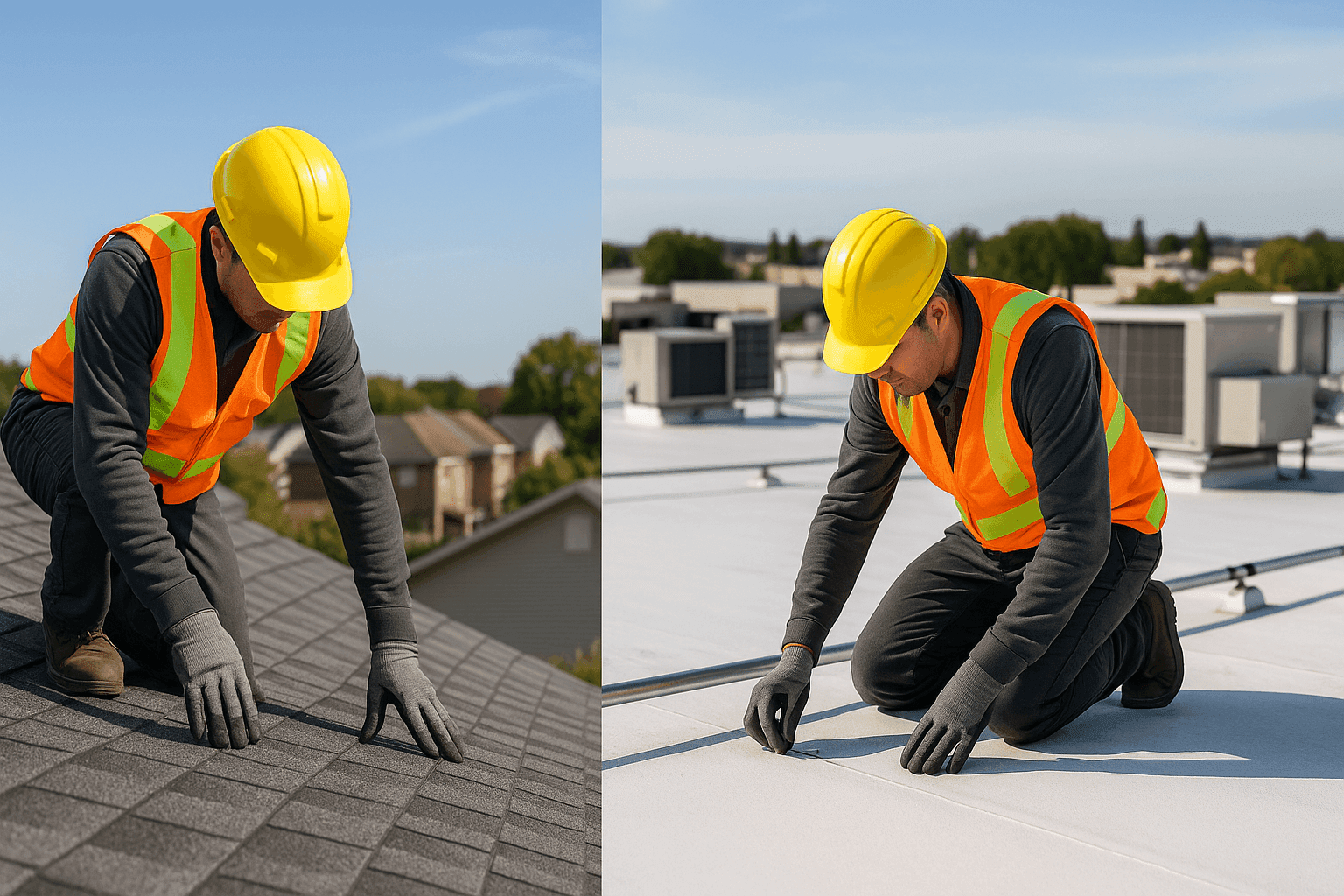
When a roof needs repair, it’s rarely at a convenient time. Maybe a sudden leak after heavy rain. Or storm damage that leaves you scrambling for “emergency roofing” help. Whether you own a home or manage a commercial property, understanding what makes your roof unique is a big deal. STL Roofing has seen it all—flat, steep, metal, shingle, tile, and more.
Let’s break down the real differences between residential and commercial roofs. Not just the stuff you hear in ads. The details that matter when you need roof repair near you—fast.
Roof Design Types 🏠🏢
Picture two houses side by side. One with a sharp, angled roof—shingles layered like fish scales. Next door, a squat building with a flat top, almost like a pancake. That’s the classic split: pitched roofs for homes, flat or low-slope for businesses.
- Residential Roofing:
Most homes have pitched roofs. These use gravity to shed water and snow. The steep slope isn’t just for looks; it helps prevent pooling and leaks. - Commercial Roofing:
Flat or low-slope roofs dominate. Think of supermarkets, warehouses, schools. These roofs double as platforms for HVAC units, solar panels, or even rooftop gardens.
Why the difference?
Homes need to look welcoming, but also handle rain and snow efficiently. Commercial buildings focus on maximizing space, both inside and out. A flat roof means you can run ductwork, store equipment, or even host events upstairs.
Common Materials
Materials are like the ingredients in your favorite recipe. Use the wrong one, and things fall apart.
Residential Roofs
- Asphalt Shingles: The go-to for most homes. Affordable, easy to install, and last 15–30 years.
- Wood Shakes: Natural look, but higher maintenance.
- Metal Panels: Durable, reflect heat, and can last 40–70 years.
- Slate or Tile: Classic and long-lasting, but heavy. Your home needs strong bones to support them.
Commercial Roofs
- Built-Up Roofing (BUR): Layers of tar and gravel. Like a lasagna for your roof—tough, but heavy.
- Modified Bitumen: Flexible, good for withstanding harsh weather.
- Single-Ply Membranes (TPO, PVC, EPDM): Lightweight, energy efficient, and quick to install.
- Metal Roofing: Increasingly popular for warehouses and office parks.
Eco-friendly options—like green roofs or cool roofs—are gaining ground in both sectors.
Maintenance Needs
A roof isn’t “set it and forget it.” Think of it like a car. Skip oil changes, and you’ll end up stranded.
Residential Roof Maintenance
- Gutter cleaning: Clogged gutters can cause water to back up, damaging your fascia or foundation.
- Shingle checks: Look for curling, missing, or cracked shingles after a storm.
- Flashings: Inspect around chimneys, skylights, and vents—these are prime spots for leaks.
- Attic inspections: Moisture or mold in your attic often signals a roof leak.
Commercial Roof Maintenance
- Membrane checks: Look for punctures, bubbling, or seam separation.
- Drainage: Flat roofs need clear drains. Standing water is a red flag.
- HVAC and rooftop units: Make sure these are properly flashed and sealed.
- Flashing and expansion joints: Critical for movement and weatherproofing.
Tip: Schedule regular inspections—twice a year is best. The National Roofing Contractors Association (NRCA) recommends spring and fall.
Cost Factors 💰
Money always matters. But cost isn't just about what you pay up front.
What Drives Residential Roof Costs?
- Size and slope: Steeper roofs mean more labor and safety gear.
- Materials: Asphalt is cheapest; slate or metal costs more.
- Tear-off vs. overlay: Removing old shingles adds to the bill but gives better results.
What Drives Commercial Roof Costs?
- Size: Commercial roofs are often huge.
- Complexity: Multiple penetrations (vents, HVAC, drains) increase costs.
- Material system: Single-ply membranes are usually less expensive to install than built-up systems.
- Access: Hard-to-reach roofs, or those requiring cranes, bump up the price.
Ongoing maintenance is key. Skimping now can lead to costly “emergency roofing” calls later.
Project Case Studies
Residential Roof Replacement: Tornado Aftermath
After a spring tornado, a St. Louis homeowner called STL Roofing for urgent shingle roof repair near you. The pitch was steep. Our team quickly removed damaged shingles, inspected the decking, and installed new weather-resistant shingles. The homeowner was back under a safe, dry roof in two days.
Commercial Roof Leak: Office Park Emergency
A local business park called us for “emergency roofing” after a surprise summer storm. Water was pooling near HVAC units. We found a puncture in the TPO membrane, patched it, and cleared blocked drains. Business resumed the next morning.
Commercial Roof Inspection Checklist 📋
Want to keep your building dry and safe? Here’s a quick checklist:
- Inspect membrane for holes, tears, or bubbling
- Check seams and flashing for separation
- Ensure drains and scuppers are clear
- Look for signs of ponding water
- Inspect rooftop equipment for leaks or loose connections
- Check parapet walls and expansion joints
- Document any repairs or changes
Safety first: Always follow OSHA guidelines when accessing roofs.
Maintenance Needs: Prevention and Longevity
A little effort goes a long way. STL Roofing recommends:
- Schedule regular inspections: Don’t wait for a leak.
- Clean gutters and downspouts: Especially after storms or in the fall.
- Trim overhanging trees: Prevents debris buildup and branch damage.
- Address small problems early: A tiny leak can become a big mess.
Following guidelines from the International Building Code (IBC) and local safety regulations helps you catch issues before they become disasters.
Costs & Time Factors
Budgeting for a new roof or major repair? Here’s what to expect:
- Residential: Most jobs take 1–3 days, depending on size and complexity. Repairs are quicker. Full replacements take longer if structural work is needed.
- Commercial: Flat roofs or large surfaces can take a week or more. Repairs are often faster but require specialized crews and equipment.
Remember, factors like weather, access, and permit requirements can affect both price and timeline.
When It’s an Emergency
Some roofing problems can’t wait. If you see:
- Sudden leaks during a storm
- Missing or blown-off shingles
- Large branches or debris on the roof
- Sagging or visible structural damage
Call for emergency roofing. Temporary tarping or patching may be needed before a full repair.
FAQ
What’s the life expectancy of my roof?
- Shingle roofs: 15–30 years
- Metal: 40–70 years
- Flat membrane roofs: 20–30 years
Regular maintenance is the key to reaching the upper end.
How often should I have my roof inspected?
Twice a year—spring and fall—plus after any major storm.
Can I walk on my commercial roof?
Only if it’s safe and you have proper training and fall protection. Flat roofs can be slippery or fragile in spots.
What are signs of hidden damage?
Water stains inside, musty smells, or sudden increases in energy bills can all point to roof problems.
Local and Seasonal Considerations 🌦️
In the Midwest, we see freeze-thaw cycles, hail, and heavy winds. In other regions, extreme heat or hurricanes may be the main threat. Always choose materials and maintenance schedules that fit your local climate.
If you’re searching for “roof repair near you” or need help fast, STL Roofing is here for both homes and businesses. We handle the big differences—so you don’t have to.
Call STL Roofing now — or reach us anytime at 888-887-3097 .