Flat Roofs vs. Pitched Roofs: Pros, Cons & Best Uses
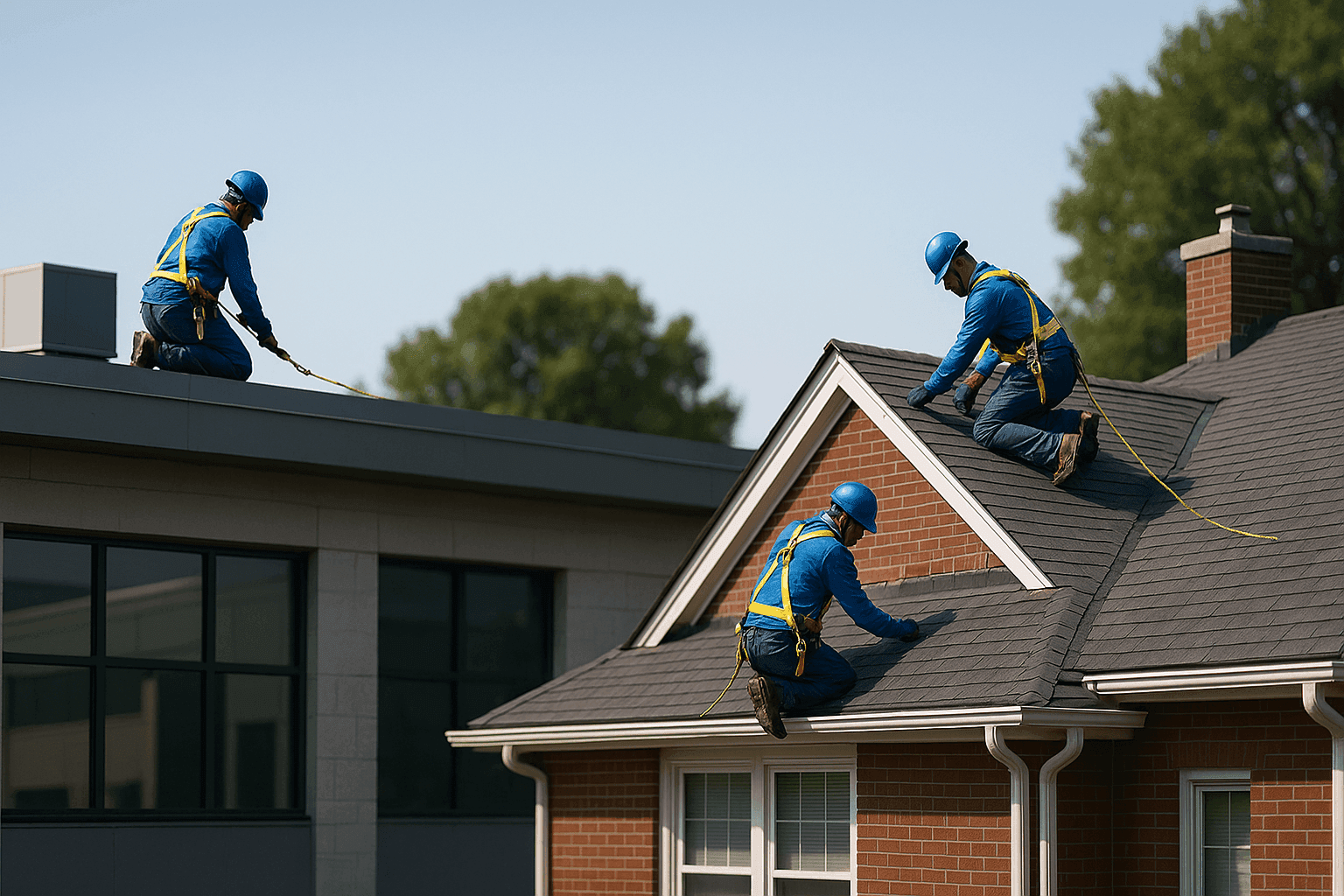
When a storm rolls in or leaks appear overhead, your roof suddenly becomes the center of attention. Choosing between a flat roof or pitched roof isn’t just about style—it affects everything from long-term costs to how well your building stands up to Midwest weather.
At STL Roofing, we’ve worked with homes and businesses across all shapes and sizes. We know the ins and outs of every rooftop. Here’s what you need to know before you commit.
What Is a Flat Roof? 🏙️
Picture a city skyline. Those smooth, level roofs on warehouses, schools, or modern office buildings? That’s a flat roof.
Technically, flat roofs aren’t completely flat. They have a slight slope—usually about 1/4 inch per foot—to let water drain. You’ll see these most often on commercial buildings, apartment complexes, and some contemporary homes.
Common flat roofing materials:
- Modified bitumen (a flexible, tar-like material)
- EPDM rubber (looks like a big, industrial sheet of inner tube)
- TPO or PVC (single-ply, white, and heat-reflective)
- Built-up roofing (layers of tar and gravel)
Flat roofs are versatile. Think rooftop gardens, HVAC platforms, solar arrays, or even a spot to sip your morning coffee.
Advantages & Disadvantages
Flat Roof Pros
- Easier Access: Maintenance feels less like a circus act. You can walk on it, inspect, or clean gutters with less risk.
- Affordable Installation: Generally, fewer materials and less labor than pitched roofs.
- Space Saver: HVAC units, solar panels, or even skylights can go right onto the roof.
- Modern Look: Clean, minimalist lines fit certain home and business designs.
- Quick Repairs: Emergency roofing fixes are often faster and safer to perform.
Flat Roof Cons
- Drainage Issues: Water doesn’t run off as fast. Puddles can form, leading to leaks if not maintained.
- Shorter Lifespan: Most flat roofs last 15–25 years, compared to shingle or tile alternatives.
- Limited Materials: Fewer style or color options versus pitched roofs.
- Thermal Retention: Tends to get hotter in summer, unless using reflective coatings.
- Snow Load Risk: In snow-heavy regions, weight can build up more quickly.
Tip: Regular inspections and Downspout Installation near you are vital for flat roofs. Standing water is the enemy.
Where Flat Roofs Work Best
Flat roofs shine on:
- Commercial buildings: Warehouses, retail plazas, factories, schools.
- Multi-family dwellings: Apartment blocks, condos.
- Modern homes: Especially in urban neighborhoods or where rooftop living is a priority.
Regional climate matters. In areas with heavy rain or snow—like the Midwest—flat roofs demand vigilant maintenance. STL Roofing recommends annual inspections and prompt leak repair to avoid costly structural issues.
This illustration shows the layers: insulation, waterproof membrane, protective surface, and drainage slope.
Pitched Roof Overview 🏡
Now, imagine a classic house—the sloping “A” shape, shingles catching the sun. That’s a pitched roof. Angles can vary from gentle to steep.
Types of pitched roofs:
- Gable (the familiar triangle)
- Hip (four sides, like a pyramid)
- Gambrel (barn-style)
- Mansard (French, flat on top, steep on sides)
Common materials:
- Asphalt shingles (America’s favorite)
- Clay or concrete tiles
- Metal panels
- Wood shakes
Pitched roofs are the traditional choice for most homes—and for good reason.
Advantages & Disadvantages
Pitched Roof Pros
- Superior Drainage: Water, snow, and debris slide right off. Less standing water means fewer leaks.
- Longevity: Quality pitched roofs can last 25–50 years, sometimes more.
- Material Variety: Shingles, tiles, metal—lots of styles and colors.
- Energy Efficiency: Attics add insulation, keeping homes cooler in summer, warmer in winter.
- High Resale Value: A classic look appeals to most buyers.
Pitched Roof Cons
- Installation Cost: More complex structure means more labor and higher material costs upfront.
- Harder Access: Inspections, gutter cleaning, and repairs can be tricky and dangerous.
- Wind Vulnerability: Steep roofs can catch strong winds, especially in tornado or hurricane zones.
- Less Usable Roof Space: Not ideal for rooftop gardens or placing heavy equipment.
Tip: Regular gutter cleaning and flashing inspections help pitched roofs last their full lifespan.
Cost, Maintenance, and Longevity
Flat Roofs
- Installation: Usually less expensive. Fewer materials, less time.
- Upkeep: Needs more frequent inspections (every 6–12 months). Watch for pooling water, cracks, membrane blisters.
- Repairs: Often quicker and less involved unless there’s major water damage.
- Lifespan: 15–25 years, depending on material and maintenance.
Pitched Roofs
- Installation: Higher upfront cost—more lumber, more layers, more labor.
- Upkeep: Inspections every year, especially after storms. Look for missing shingles, damaged flashing, clogged gutters.
- Repairs: Can be more involved, especially on steep-slope roofs.
- Lifespan: 25–50+ years with good care.
Pro Tip: Always check your local building codes (see International Building Code Section 1507) for minimum roofing standards and safety requirements.
Choosing the Right Roof for Your Property 🏠
Residential Considerations
- Style: Do you want modern or classic curb appeal?
- Budget: Upfront cost vs. long-term maintenance.
- Usage: Need extra outdoor space (flat roof) or a bigger attic (pitched roof)?
- Neighborhood norms: HOA rules or historic districts may have restrictions.
Commercial Considerations
- Equipment: Need to place HVAC or solar panels on the roof?
- Access: Will maintenance workers need regular, safe access?
- Building shape: Long, wide buildings work better with flat roofs.
- Foot traffic: Flat roofs allow for maintenance, but require safety rails and regular checks.
Regional & Climate Factors
- Snow & Rain: Heavy precipitation? Pitched roofs shed water better, but flat roofs with excellent drainage and regular Downspout Repair can still work.
- Wind: High-wind zones may require reinforced trusses or special anchoring for pitched roofs.
- Heat: Light-colored membranes on flat roofs keep buildings cooler in summer.
Tip: STL Roofing can assess your property and climate, and recommend the best option for both function and value.
Long-Term Maintenance: What to Expect
- Flat Roofs: Expect to budget for more frequent inspections and minor repairs. Watch for clogged drains and seams.
- Pitched Roofs: Gutter cleaning, shingle replacement, and flashing repair are key. Attic ventilation and insulation keep energy bills in check.
- Both: After a big storm, always schedule a professional inspection—even if you don’t see visible damage.
STL Roofing’s Flat vs. Pitched Roof Experience
We’ve installed, repaired, and replaced thousands of roofs across homes, schools, hospitals, and factories. Our emergency roofing team responds day and night, whether it’s a flat roof leak or shingles blown off in a storm.
You need a roofer who understands both systems—how they wear, how they drain, and how to spot trouble before it becomes an emergency. We do it all: Downspout Installation near you, skylight repair, storm damage restoration, and more.
Practical Tips for Every Rooftop
- Install gutter guards to keep debris out and prevent backups.
- Schedule annual inspections—especially before storm season.
- Trim trees near your roof to reduce debris and branch damage.
- Check attic ventilation for pitched roofs to prevent mold and rot.
- For flat roofs, make sure all drains and scuppers are clear after heavy rain.
Authoritative Resources
- International Building Code (IBC) Section 1507: Roofing standards and safety.
- National Roofing Contractors Association (NRCA): Guidelines for installation and maintenance.
- OSHA: Fall protection and worker safety during roof work.
Flat Roofs vs. Pitched Roofs: FAQ
What’s more expensive, a flat or pitched roof?
Pitched roofs cost more upfront, but flat roofs may need more frequent repairs. Over time, costs can even out depending on care and climate.
Are flat roofs more likely to leak?
Flat roofs can be prone to leaks if not maintained. Regular inspections and well-installed drain systems are critical.
Can I convert my flat roof to a pitched roof?
Sometimes, but it’s a big structural project. STL Roofing can assess your building and provide realistic options.
What’s best for solar panels?
Both work, but flat roofs offer easier access and angle adjustment. Pitched roofs may need brackets for proper orientation.
Local & Seasonal Considerations
In the St. Louis region and much of the Midwest, we see:
- Heavy spring storms—prompting emergency roofing calls.
- Snow buildup in winter—especially on flat roofs.
- High humidity summers—requiring adequate ventilation and insulation.
Homeowners and business owners alike should plan for twice-yearly inspections—especially after severe weather. STL Roofing offers leak repair, sealants, and coatings tailored for every roof type and season.
When your roof needs attention—fast or planned—STL Roofing is ready with honest advice and 24/7 emergency roofing services. For Downspout Installation near you, flat or pitched roof repairs, and more:
Call STL Roofing now — or reach us anytime at 888-887-3097 .