Downspout Installation & Repair: Protecting Your Foundation
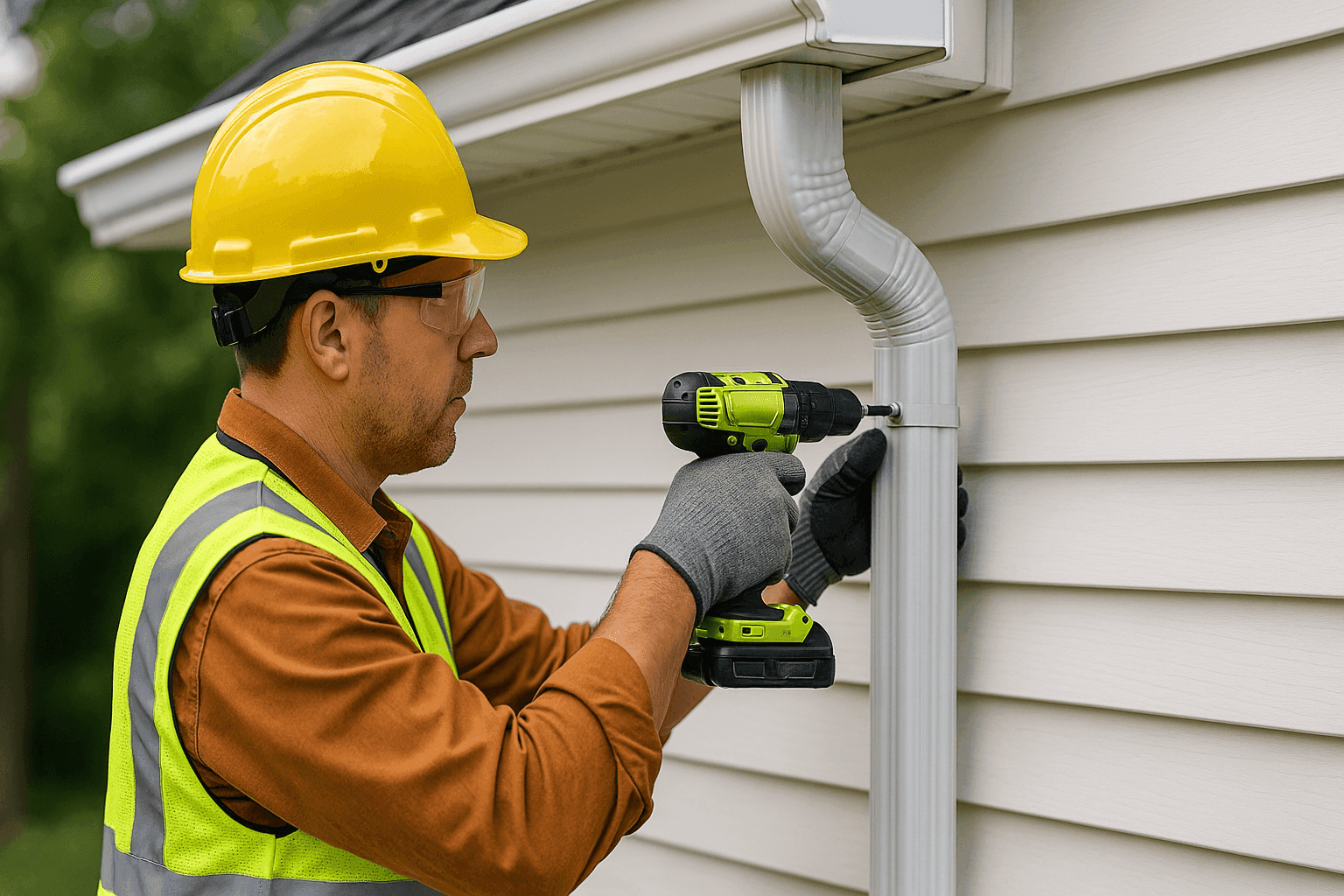
Rainwater is relentless. It sneaks off your roof, follows gravity’s call, and if your downspouts stumble, that water goes where it shouldn’t—soaking soil, flooding basements, and gnawing at your home’s bones. At STL Roofing, we know emergency roofing isn’t just about shingles; it’s about every channel that keeps storms outside where they belong.
If you’ve ever stepped into a puddle in your own basement, you know: one faulty downspout can drown your peace of mind. Let’s talk about why downspout installation and repair is more than just a detail—it’s a shield for your foundation.
Why Downspouts Matter 🏡
Downspouts are the unsung heroes of your roof system. They guide water safely away from your foundation, sidewalks, and landscaping. Think of them as the gutters’ getaway cars—if they break down, water piles up fast.
Why does this matter?
- Foundation Erosion: Water pooling near your base can eat away at concrete and crawlspaces.
- Mold & Mildew: Damp basements and musty smells love leaky downspouts.
- Structural Damage: Over time, unchecked runoff can warp wood, crack walls, and create costly repairs.
- Ice Dams: In winter, bad drainage means dangerous icicles and freeze-thaw cycles that split concrete.
The National Association of Home Builders and the International Code Council both stress that a solid drainage system is vital to a building’s health.
Signs of Downspout Failure
Downspout problems don’t knock politely. They leave clues:
- Water stains on basement walls or floors
- Soil washed away near your foundation
- Overflowing gutters, especially after rain
- Downspouts pulling away from the wall
- Visible rust, dents, or splits in the metal
- Plant growth or debris at the base
Diagram: Signs to Watch For
      [Roof]
        |
     [Gutter]
        |
     [Downspout] --> 🚩
        |
    [Splash Block]
        |
    [Soil/Foundation]
Look for pooling water at the 🚩—that’s trouble.
Installation Best Practices
A downspout is only as good as its installation. Here’s how STL Roofing tackles it:
- Slope Matters: Downspouts must angle away from your foundation by at least 6–10 feet where possible.
- Secure Fastening: Brackets every 10 feet and at all joints—no sagging allowed.
- Splash Blocks & Extensions: Direct water at least 3–6 feet from the house.
- Code Compliance: Local codes (based on the International Residential Code and St. Louis County regulations) may require minimum distances, secure fastening, and approved materials.
- Sizing: Match gutter and downspout size to your roof area and rainfall intensity (FEMA and ICC guidelines).
Winterizing Tip: Install heated cables or use insulated downspout covers to prevent ice dams and freezing.
Repair and Replacement Steps
Not every downspout needs a full replacement. Sometimes a smart repair does the trick.
1. Inspection
- Check for rust, holes, blockages, and loose brackets.
- Look for separation at joints.
2. Clearing Clogs
- Remove leaves, twigs, and nests with a plumber’s snake or hose.
- For stubborn blockages, detach the downspout and flush thoroughly.
3. Sealing Leaks
- Apply exterior-grade sealant at seams and joints.
- Patch holes with downspout-specific repair tape or metal patches.
4. Replacing Sections
- Cut out damaged pieces and use slip connectors to add new sections.
- Ensure watertight joints.
5. Reattachment
- Use corrosion-resistant screws and fresh brackets as needed.
Safety Reminder: Always use a sturdy ladder and avoid working alone. Wear gloves and eye protection.
DIY vs. Professional Service 🛠️
Could you fix a downspout yourself? Maybe. Should you? That depends.
DIY Might Work If:
- The repair is minor (e.g., clearing a clog, tightening a bracket).
- You’re comfortable on ladders and have the right tools.
But Call STL Roofing If:
- There’s visible foundation or structural damage.
- The downspout is out of reach or dangerously loose.
- Water is pooling inside your home or business.
- You need to match materials or comply with code.
Sometimes, what looks like a small repair is just the tip of the iceberg. Our team spots hidden risks—and we’re available 24/7 for emergency roofing needs.
Local Code Considerations
Downspout installation isn’t a free-for-all. In St. Louis County and most municipalities, codes require:
- Minimum downspout size (often 2”x3” or larger for commercial roofs)
- Discharge at least 3 feet from the foundation (sometimes more)
- Secure fastening to prevent wind dislodgement
- Use of approved corrosion-resistant materials
Check with your local building department or refer to the International Residential Code for the latest updates. STL Roofing always installs to code—no shortcuts.
Tips for Winterizing Downspouts
Missouri winters can be brutal. Here’s how to keep your downspouts moving:
- Clear leaves and debris before first freeze.
- Add extensions to keep runoff away from icy footpaths.
- Consider heated gutter guards for heavy-snow roofs.
- Inspect for cracks or loose joints after every major snow or ice event.
STL Roofing’s End-to-End Solutions
From inspection to installation, STL Roofing handles:
- Downspout and gutter cleaning
- Emergency roofing and storm damage repair
- Custom metal fabrication for unique rooflines
- Code-compliant installation for residential and commercial buildings
- Preventative maintenance plans
- Warranty-backed labor and materials
We’re here 24/7 for urgent leaks, too.
FAQ
Q: How often should I inspect my downspouts?
A: Twice a year—once in spring, once in fall. After major storms, check again.
Q: Can clogged downspouts cause roof leaks?
A: Yes. Overflow can back up under shingles and rot decking.
Q: What’s the difference between gutters and downspouts?
A: Gutters collect roof water. Downspouts move it to safe ground.
Q: Do I need to replace old metal downspouts with plastic?
A: Not necessarily. Properly maintained metal downspouts last decades. We’ll assess your options.
Local & Seasonal Considerations 🍂
In the Midwest, heavy thunderstorms and ice storms test every roof. STL Roofing recommends:
- Extra-long downspout extensions for clay soils
- Splash blocks or drain tiles for heavy rainfall
- Cleaning before and after leaf season
- Inspections after hail, high winds, or deep freezes
If you’re searching for “Downspout Installation near you,” go with a local team who understands real St. Louis weather.
Water damage waits for no one. If your downspouts aren’t up to the challenge, neither is your foundation. Let STL Roofing’s emergency roofing crew keep you safe, dry, and ready for whatever the clouds throw your way.
Call STL Roofing now — or reach us anytime at 888-887-3097 .