Chimney Flashing & Cap Repair: Stop Costly Leaks
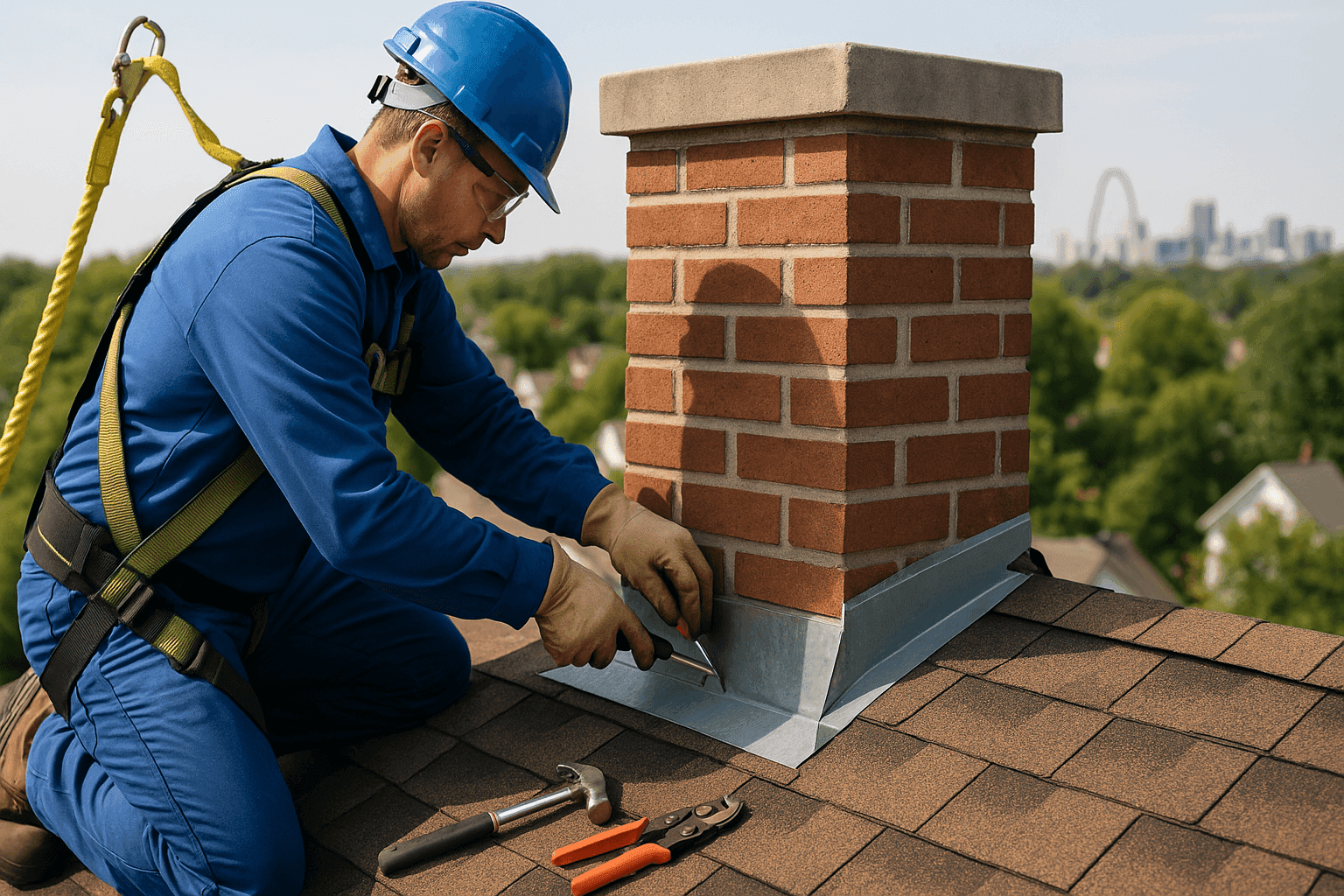
When your chimney leaks, it feels like your home’s defenses are crumbling. Water stains creep down the walls, ceilings bubble, and suddenly, every rainy forecast brings anxiety. STL Roofing knows that distress. We see it daily—families and businesses facing hidden leaks that start small but quickly drain your time, money, and peace of mind.
Today, we’re talking about one of the most overlooked but crucial sources of roof leaks: chimney flashing and caps. If you’re reading this, you’re already ahead of most property owners. Let’s break down what goes wrong, how to spot it, and what happens next.
Chimney Flashing Basics
Your chimney is like a castle turret—strong, but only as good as its defenses. The metal strips at its base, known as flashing, are your first shield against rain, snow, and meltwater sneaking in where brick meets shingle. The cap, perched on top, is like a helmet—keeping out rain, debris, and critters.
- Flashing: Thin metal (usually aluminum or galvanized steel) sealed around the base, stepping up the sides. It directs water away from seams.
- Cap: Covers the flue opening, blocking water and animals but letting smoke escape.
- Sealant: Fills gaps, but wears out—think of caulk as mortar between the stones.
Why so leak-prone? Chimneys settle, bricks shift, and weather pounds these joints year-round. Tiny cracks open, water finds a way, and over time, what started as a drip can rot decking, ruin insulation, and even erode interior walls.
Detecting Leaks
Leaks are sneaky. They rarely announce themselves with a dramatic waterfall. Instead, look for these subtle signals:
- Yellow or brown stains on ceilings near the chimney
- Peeling paint or bubbling plaster
- Damp smells in the attic or upstairs
- Visible rust on the flashing or cap
- Crumbling mortar or moss growth at the chimney base
Still unsure? During a hard rain, check your attic with a flashlight. Shine it near the chimney—glistening wood or insulation is an SOS.
Repair vs. Replacement 🛠️
Not every leak means a full overhaul. Here’s how STL Roofing approaches decision-making:
- Minor Issues: Small cracks or loose corners in flashing can often be resealed or gently reset.
- Moderate Damage: Rusty or bent flashing, missing sealant, or a damaged cap may require replacing sections.
- Severe Problems: If water has rotted the roof decking, eroded mortar, or the flashing is missing altogether, replacement is safer and more cost-effective.
We always use materials that meet the International Residential Code (IRC) for weatherproofing and durability. No shortcuts.
STL Roofing’s Chimney Services
When you call STL Roofing for emergency roofing or routine roof repair near you, here’s what we bring to the table:
- Rapid, respectful inspection—no mess, no drama
- Detailed photo documentation of the problem spots
- Honest assessment: repair or replace, and why
- Safety-first work, with all techs following OSHA fall standards
- High-grade materials built to last through Midwest seasons
We work with residential and commercial properties—everything from cozy bungalows to sprawling warehouses.
Freeze/Thaw: Seasonal Risk Factor ❄️
Here’s where things get tricky. In regions with harsh winters, freeze/thaw cycles are brutal on chimneys. Water seeps into tiny cracks. When temperatures drop, the water freezes, expands, and makes those cracks wider. By spring, flashing can peel away from brick like old wallpaper.
- Inspect flashing and caps every spring and fall
- Address minor cracks before cold weather hits
- Consider waterproof coatings designed for your climate
The National Roofing Contractors Association (NRCA) warns that seasonal neglect can double your risk of costly water damage.
Quick Safety Checklist
Before you inspect or attempt any minor fixes, remember:
- Never climb on a wet or icy roof
- Always use a sturdy, properly placed ladder
- Wear rubber-soled shoes for grip
- Avoid leaning against the chimney itself
- If you spot mold or significant water stains inside, call a pro—hidden rot can cause collapse
DIY vs. Call a Pro
Some tasks, like resealing a tiny gap or clearing debris from the cap, are safe for confident DIYers with the right gear. But if you see:
- Rust, holes, or lifted flashing
- Evidence of interior leaks
- Damage after a major storm
It’s time to call STL Roofing. Chimney work means heights, sharp metal, and heavy masonry—not a job for a borrowed ladder and wishful thinking.
What Pros Do On Arrival
When our team shows up, here’s what you can expect:
- Visual and moisture inspection—inside and out
- Check all flashing joints, corners, and sealant lines
- Assess chimney cap and flue covers
- Document damage with photos for your records (and insurance, if needed)
- Make safe, temporary waterproofing if heavy rain is coming
- Provide a clear action plan, including materials and estimated timeline
We follow guidelines set by the National Fire Protection Association (NFPA) and local building codes to ensure your repair is done right the first time.
Prevention & Maintenance
A little TLC goes a long way. Here’s how to keep leaks at bay:
- Schedule a professional inspection at least once a year, especially before and after winter
- Clean gutters and downspouts so water can flow away from the chimney base
- Watch for loose mortar or bricks and address promptly
- Use only high-quality, weather-rated sealants on flashing joints
- Add a chimney cap if you don’t have one—this single fix blocks most rain entry
Costs & Time Factors
No two repairs are identical, but here’s what affects cost and timing:
- Extent of Damage: Surface-level resealing takes hours; replacing flashing and rotted wood takes longer.
- Material Choice: Copper is pricier but lasts decades; aluminum is more affordable.
- Access Difficulty: Steep roofs, tall chimneys, or complex structures require more safety setup.
- Season: Emergency roofing in winter can cost more due to hazard pay and weather delays.
Most basic repairs take a half-day or less. Full replacements may stretch to two days, depending on weather and material procurement.
When It’s an Emergency
A missing or mangled flashing after a storm? Water pouring in during heavy rain? That’s when you need emergency roofing—not next week, but now.
- Move valuables away from leak sites
- Place buckets or tarps as a stopgap
- Call STL Roofing for immediate assessment
We’re equipped for urgent roof repair near you, including temporary patches to stop damage until a full fix is possible.
FAQ
How often should chimney flashing be inspected?
At least once a year, ideally after winter and before fall storms.
Will insurance cover chimney leak repairs?
If a sudden event (like a storm) caused the damage, most policies help. Ongoing neglect usually isn’t covered—check your policy.
Can I just patch leaks with caulk?
Caulk is a short-term fix. If flashing is loose, rusted, or the cap is missing, you need a professional repair to stop leaks for good.
What’s the worst-case scenario if I ignore a leak?
Unchecked, chimney leaks can rot roof decking, ruin insulation, and even weaken your home’s structure—especially during freeze/thaw cycles.
Local/Seasonal Considerations
Every region has its own challenges. In St. Louis and similar climates, dramatic temperature swings and seasonal storms put extra strain on every joint, seam, and cap. Homeowners should:
- Schedule roof and chimney checks after hail, windstorms, or heavy snow
- Watch for ice dams in gutters, which can force water under flashing
- Use only repair materials rated for both extreme cold and summer heat
The International Code Council (ICC) and local building departments offer guidelines on minimum flashing heights and weatherproofing—STL Roofing always follows the latest standards.
If you’ve spotted stains, drips, or just want peace of mind before the next storm, don’t wait. Call STL Roofing now — or reach us anytime at 888-887-3097 .